


Amazon Seller Trends 2026: What Will Actually Work (and What Will Die)
The Amazon marketplace is entering a new phase. What worked in 2018, 2020, or even 2024 will not guarantee success in 2026. Increased competition, stricter compliance, AI-driven algorithms, rising costs, and smarter buyers are reshaping how sellers must operate. If you are planning to start selling on Amazon or want to survive and scale in 2026, this guide will give you a realistic, no-hype roadmap. This is not theory. This is how Amazon selling is evolving—and how smart sellers must adapt.
Grace Lilly
12/28/20254 min read
Our services
Provide a general summary of the services you provide, highlighting key features and benefits for potential clients.
Service title
Write a short text about your service. Highlight key benefits for potential clients.
Service title
Write a short text about your service. Highlight key benefits for potential clients.
Service title
Write a short text about your service. Highlight key benefits for potential clients.


Amazon Seller Trends 2026: What Will Actually Work (and What Will Die)
The Amazon marketplace is entering a new phase. What worked in 2018, 2020, or even 2024 will not guarantee success in 2026. Increased competition, stricter compliance, AI-driven algorithms, rising costs, and smarter buyers are reshaping how sellers must operate.
If you are planning to start selling on Amazon or want to survive and scale in 2026, this guide will give you a realistic, no-hype roadmap.
This is not theory. This is how Amazon selling is evolving—and how smart sellers must adapt.
Why 2026 Will Be a Turning Point for Amazon Sellers
Amazon is no longer a “side hustle” marketplace. By 2026, Amazon will operate more like a regulated retail ecosystem than an open platform.
Several forces are driving this shift:
Increased government and consumer scrutiny
Amazon’s focus on buyer trust
Advanced AI systems for monitoring sellers
Higher operational and advertising costs
Saturation of low-quality sellers
In simple words:
👉 Amazon will reward serious, compliant, value-driven sellers—and eliminate shortcuts.
Amazon Selling Models That Will Actually Work in 2026
Not all Amazon business models are dying. But they are evolving. Here are the models that will still work—if done correctly.
1. Amazon FBA Wholesale (With Full Compliance)
Wholesale is expected to become stronger, not weaker, by 2026—but only for sellers who follow the rules.
Why wholesale will survive:
Authentic branded products
Reliable supply chains
Higher buyer trust
Lower listing suppression risk
What will change:
Amazon will increasingly ask for:
Authorized distributor letters
Recent invoices
Brand approvals
Ungated categories will shrink
Random sourcing will fail
Winning strategy for 2026:
Build direct relationships with brands
Focus on fewer SKUs, higher volume
Maintain clean documentation
Price for margin, not Buy Box wars
Wholesale sellers who treat Amazon like a real retail business will dominate.
2. Private Label With Real Brand Value
Generic private label is already struggling—and by 2026, it will mostly disappear.
What will NOT work:
Copy-paste products
Identical packaging
Keyword-stuffed listings
Competing only on price
What WILL work:
Micro-brands with clear positioning
Solving a specific problem
Bundles and kits
Strong brand storytelling
Amazon is moving toward rewarding brands, not just sellers.
If you plan private label for 2026, think:
Who is this product for?
Why would someone choose this brand?
What makes it defensible?
3. Bundling & Multipacks (Smart Sellers’ Advantage)
Bundling is one of the most underused strategies and will grow significantly by 2026.
Why bundles work:
Reduced direct competition
Higher average order value
Better Buy Box stability
Unique ASINs
Examples:
Complementary products
Refill packs
Starter kits
Multi-unit value bundles
Amazon prefers listings that increase cart value and customer satisfaction—bundles do exactly that.
4. Amazon Business (B2B) Selling
By 2026, Amazon Business (B2B) will be a major growth area.
Why B2B matters:
Bulk orders
Lower return rates
Repeat customers
Higher margins on volume
Products that do well:
Office supplies
Industrial items
Janitorial products
Medical & lab consumables
Packaging materials
Sellers ignoring B2B are leaving serious money on the table.
Amazon Business Models That Will Decline or Die by 2026
Some models won’t disappear overnight—but they will become unprofitable or extremely risky.
1. Retail Arbitrage With Thin Margins
Retail arbitrage is already under pressure.
By 2026:
Invoice verification will be stricter
Retail receipts will not protect accounts
Price fluctuations will increase
Returns will destroy margins
RA may still work for experienced sellers—but it will not be beginner-friendly.
2. Generic Private Label (Race to the Bottom)
If your product can be:
Found on Alibaba by 1,000 sellers
Copied within weeks
Sold cheaper by Amazon itself
…it will not survive 2026.
Amazon is actively suppressing low-quality, high-return products. Generic PL sellers will face:
Listing suspensions
Ad cost inflation
Ranking instability
3. “No PPC” Selling Strategies
Organic-only strategies are a myth.
By 2026:
PPC will be mandatory for visibility
Listings without ads will struggle
Data-driven ad optimization will matter more than spend
Sellers who refuse to learn PPC will lose market share.
Amazon Algorithm Changes Expected by 2026
Amazon’s A9/A10 system is evolving into a behavior-driven AI model.
Here’s what will matter more:
1. Conversion Rate (Not Just Keywords)
Amazon cares less about keyword stuffing and more about:
Click-through rate
Time on listing
Sales velocity
Review quality
Better listings will outrank keyword-heavy listings.
2. Account Health as a Ranking Factor
By 2026, seller account health will directly impact:
Buy Box eligibility
Organic ranking
Ad performance
Key metrics:
Order Defect Rate
Late Shipment Rate
Valid Tracking Rate
Customer feedback trends
Poor sellers won’t just get suspended—they’ll become invisible.
3. AI-Based Listing Suppression
Amazon’s AI will:
Detect misleading claims
Flag policy violations automatically
Suppress listings before complaints
This means compliance is no longer optional.
Skills Amazon Sellers Must Learn Before 2026
Selling on Amazon in 2026 will require real skills, not just tools.
1. Data Analysis & Profit Control
Sellers must understand:
Contribution margin
Break-even ACOS
Inventory aging
True landed cost
Guesswork will kill profitability.
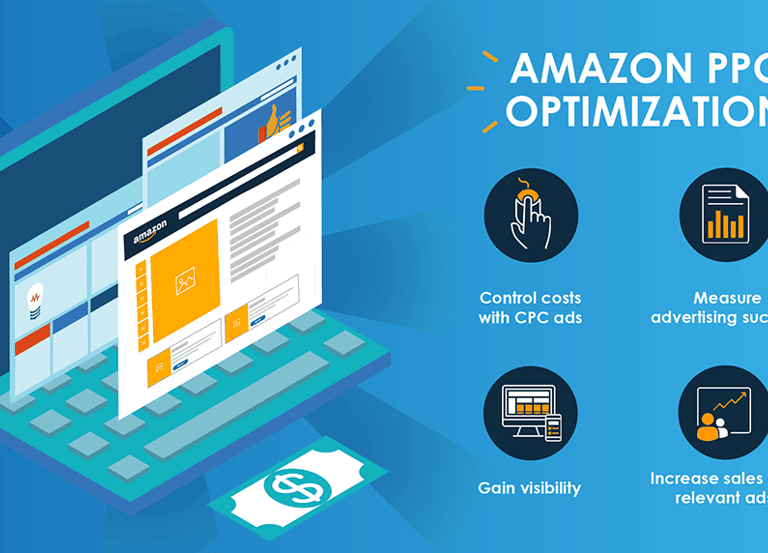
2. PPC Optimization (Not Just Running Ads)
Future sellers must:
Analyze search term reports
Kill unprofitable keywords
Scale winning terms
Use product targeting strategically
PPC will be a profit tool, not just a traffic source.
3. Supplier Negotiation & Relationship Building
Margins will depend on:
Payment terms
MOQs
Exclusive agreements
Price protection
Strong supplier relationships = survival.
4. Compliance & Documentation Management
Winning sellers will maintain:
Organized invoices
Brand approvals
Safety documentation
Product testing records
Amazon is moving toward zero-tolerance enforcement.
How New Sellers Should Prepare in 2025 for 2026 Success
If you are starting now, this is your advantage.
Do this instead of rushing:
Learn one model deeply
Start with fewer SKUs
Track every cost
Build SOPs early
Treat Amazon like a real business
Avoid chasing shortcuts, viral hacks, or unrealistic income claims.
Is Amazon Still Worth It in 2026?
Yes—but not for everyone.
Amazon in 2026 will reward:
✅ Patient sellers
✅ Data-driven decisions
✅ Compliance-focused operations
✅ Long-term brand builders
Amazon will punish:
❌ Shortcut seekers
❌ Rule-breakers
❌ Low-margin gamblers
❌ Poor customer experience
The opportunity is still massive—but only for those willing to evolve.
Final Advice: Start Like It’s Already 2026
The biggest mistake sellers make is building a 2018 business in a 2026 marketplace.
If you:
Focus on value
Respect compliance
Control margins
Invest in skills
Amazon can still be one of the most powerful business platforms in the world.
At Amazon Big Step, our mission is simple:
Help sellers build sustainable, compliant, profitable Amazon businesses—not short-term experiments.
Free Consultation
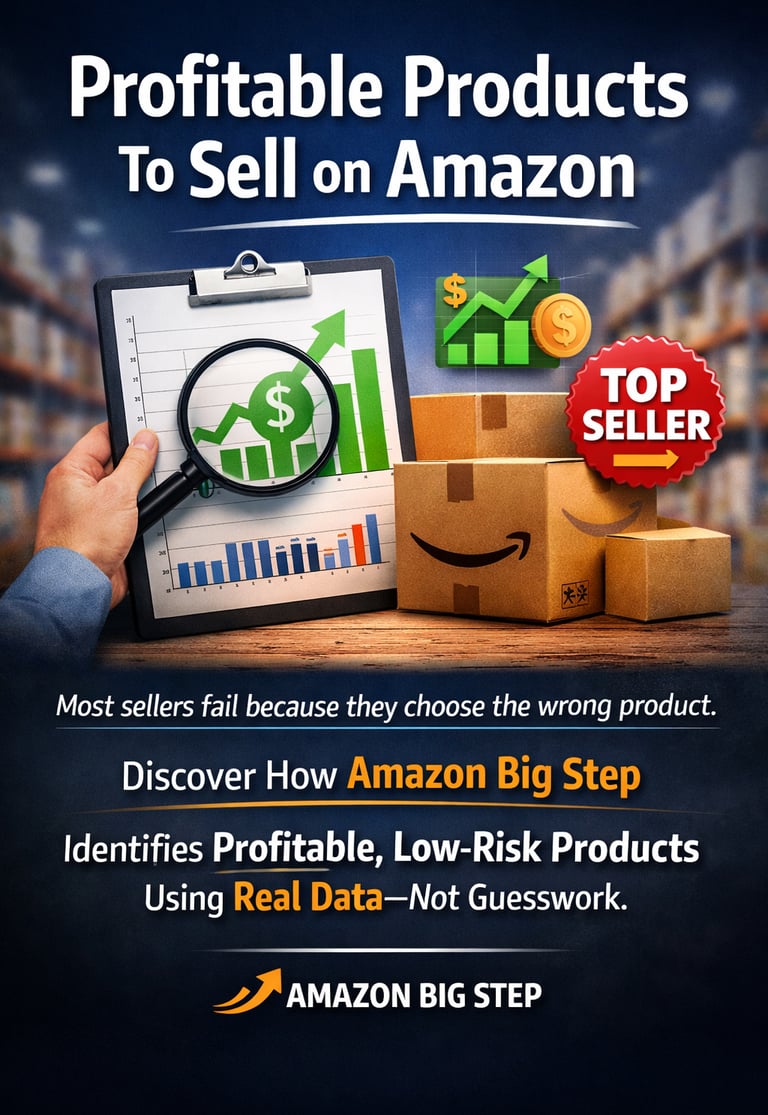
How to find Profitble products for selling on Amazon
Book Now.
Expertise
Your partner for Amazon growth and success.
Services
Insights
connect@amazonbigstep.com
+1 (859)4182348
© 2025. All rights reserved.